← ALL INSIGHTS
Incident Recovery & Safety
Axis Rail Group
24 October 2026
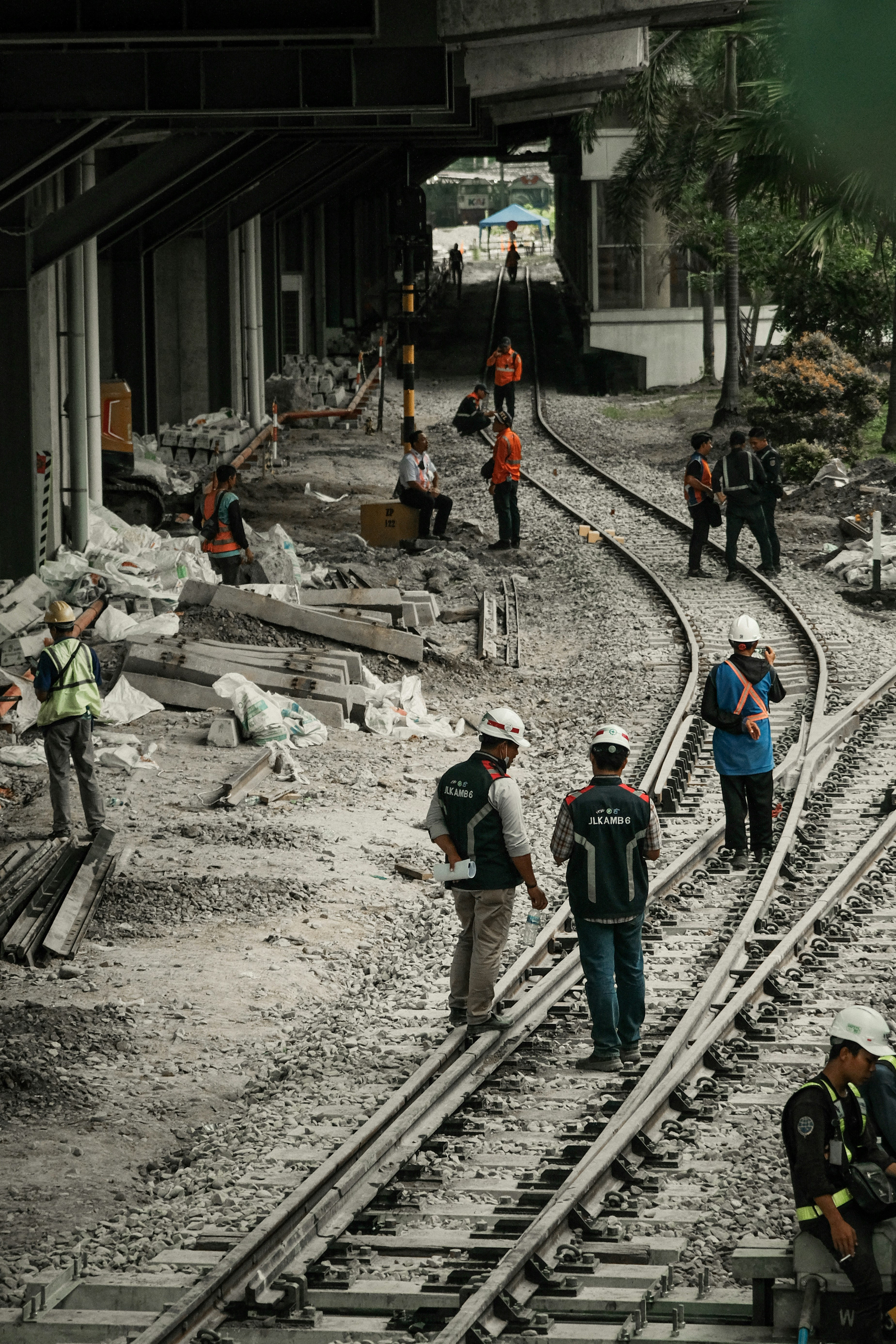
ILLUSTRATIVE RAILWAY IMAGERY / AXIS RAIL GROUP PERSPECTIVES
A major railway incident creates immediate and competing demands: protect people, stabilise the site, control further risk, preserve evidence, assess damage and restore the railway. Effective response depends on coordinating these demands rather than treating recovery and investigation as separate activities that begin at different times.
Safety and site control come first
The initial priorities are protection of life, prevention of further harm, emergency-service coordination and control of the affected railway. The response arrangements depend on the location, equipment, cargo, infrastructure and nature of the incident. Decisions about access, isolation and movement should be made under a clear command structure and the applicable safety rules.
Recovery is physical work, not only a plan
Derailment recovery may involve rerailing equipment, jacking, lifting, controlled movement, removal of damaged vehicles and the preparation of safe access. The appropriate method depends on vehicle condition, stability, ground bearing capacity, available equipment, infrastructure damage and other site-specific hazards. No single recovery method is suitable for every event.
The recovery team needs competent personnel, suitable equipment, engineering input where required and a controlled sequence of work. The objective is not merely to move vehicles: it is to complete the work without introducing additional harm or damage, and to support a safe return to service.
Investigation must be considered before the site changes
Recovery activity can alter or remove evidence. Scene records, photographs, operating data, equipment condition and witness information may be important to understanding the sequence of events. Where an independent investigating authority is involved, its directions and evidence-preservation requirements must be respected. Safety-critical intervention may still be necessary; the interface between investigators and recovery leadership must be managed explicitly.
A sound investigation examines not only the immediate event but also relevant technical, human, organisational and system factors. Findings should lead to proportionate actions with accountable owners, verification of completion and an assessment of whether the controls are effective.
Preparedness is a capability that can be developed
Railways can strengthen their response through realistic emergency exercises, command and communication training, recovery-equipment familiarisation, practical rerailing training, incident-investigation training and structured reviews of lessons learned. Exercises should test how different parties work together, not simply whether a procedure exists.
Axis Rail Group supports emergency response planning, practical derailment and incident recovery, investigation support, specialist training, exercises and corrective-action follow-through. Mobilisation, personnel and equipment requirements are assessed against each assignment and its location.
Reference basis
This perspective is consistent with published safety-investigation guidance from the Australian Transport Safety Bureau (Railway Accident Investigation Guidelines for Rail Transport Operators), the UK Rail Accident Investigation Branch and the Office of Rail and Road. Jurisdiction-specific reporting, preservation and investigation duties must always be checked for the railway concerned.
Australian Transport Safety Bureau — Railway accident investigation guidelines
FROM PERSPECTIVE TO PRACTICE
Explore how Axis approaches the challenge.
CONTINUE EXPLORING / AXIS INSIGHTS
More perspectives from Axis.
Competency & Training
Competency assurance: beyond certificates and expiry dates
A valid certificate is only one part of the decision to assign a person to safety-critical railway work. Evidence, scope, restrictions and deployment conditions matter.
READ INSIGHT ↗
Freight & Heavy Haul
Heavy-haul railway performance starts before the first train
Train length, loading cycles, terminal arrangements, fleet availability and maintenance strategy need to be tested together before a heavy-haul operation is commissioned.
READ INSIGHT ↗
Operations Control Centre
Operations control centres: readiness is more than a control room
An OCC is only effective when authority, procedures, information flows, staff competence and degraded-mode decisions have been proven together.
READ INSIGHT ↗